Delivery you can plan a business around
A daily number makes progress real and makes a completion forecast respond to what is actually happening, rather than to what someone reported.
FOR DEVELOPERS
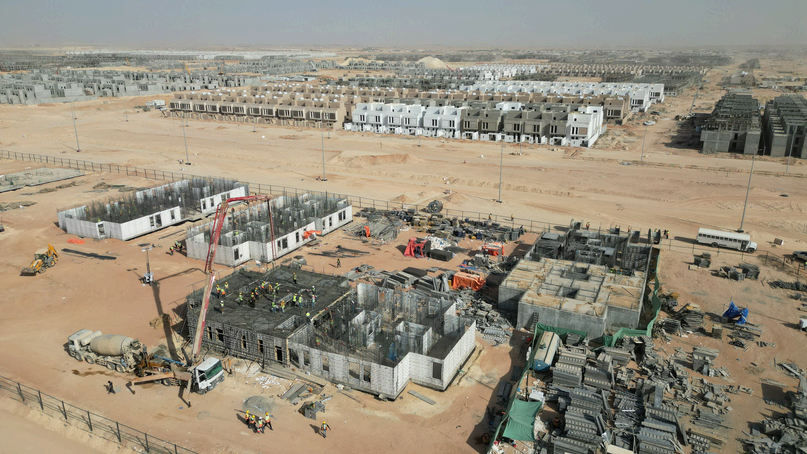
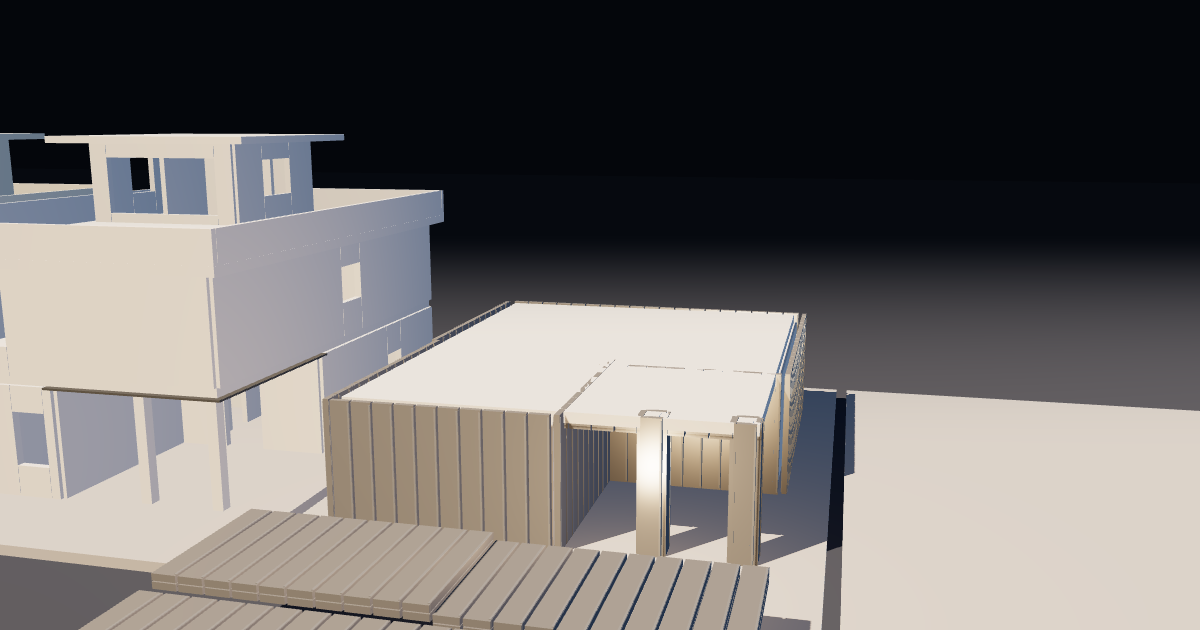
Twenty-four sets of aluminum formwork. Four pours per villa: ground floor, first floor, roof, parapet. About 4,300 pours across a 16-month program, which works out to three villas every working day for roughly 358 of them.
That is not a target. It is the rate one site is running at, logged pour by pour as it happens. A second line would be a second three.
FROM PROGRAM DURATION TO DAILY OUTPUT
You have seen the chart. Thousands of bars, four years wide, produced by a planner who has never poured a slab. It is a statement of intent, and intent is not capacity.
We start at the other end, with three questions.
How many units have to be finished? What daily rate reaches the date? And what panels, crews, pours and machines does that rate actually require?
If the answer is that your date needs seven units a day and the geometry supports four, you will hear that in the first meeting. That is a more useful conversation than the one you would otherwise have in month nine.
What the rate changes
A daily number makes progress real and makes a completion forecast respond to what is actually happening, rather than to what someone reported.
Phases, sales commitments, downstream trades and handovers can be planned against a structural capacity you can watch, not a bar on a chart.
The same panels, the same sequence, the same crews, several thousand times. Variation between your units drops because the process producing them stopped varying.
A shared library of reusable panels supports different plans, elevations and community types. Nothing forces your development to look like a barracks.
TAKT connects buildings, zones, crews, materials and equipment into a single live picture, so a constraint forming in phase three is visible while you are still selling phase two.
DESIGN · MANUFACTURE · PRODUCE · FINISH · LEARN
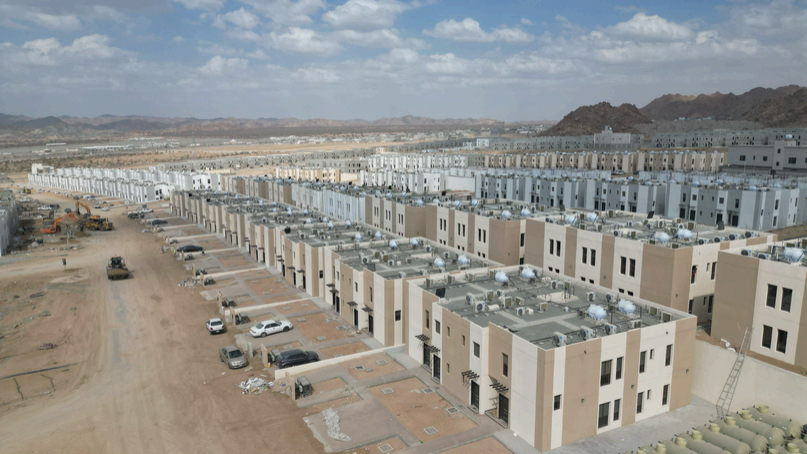
Running today: design for production, industrialized structural construction, mechanized paint and finishing, and TAKT across the line.
Being built: STRUX in-house formwork manufacturing for 2027, and construction robotics for 2028.
Each is useful on its own. They become worth considerably more when they share one production target, because the constraint simply moves to whichever one you left out.
MANAGE THE PROBABLE FUTURE, NOT ONLY THE RECORDED PAST
TAKT forecasts:
Every completed cycle then scores the forecast that preceded it. About 4,300 pours at Al Fursan is about 4,300 opportunities for the forecast to be wrong and get corrected. That is why the prediction on your development would start out better than the one at Al Fursan did.
Closing
Bring us the number and the date. We will build the line around them, and show you the panel count, crew count and pour schedule that hold the rate.