
THE PRODUCTION CASE
A contractor starts every project from nothing. That is the problem worth solving.
Construction is one of the few large industries where productivity has barely moved in a generation. Not because the people are worse than they used to be, but because of a structural fact: almost every project starts from zero.
A contractor wins a job, assembles a crew, learns the geometry, works out the sequence, gets good at it around month nine, finishes, and disperses. Everything that was learned leaves with the people who learned it. The next job starts again at zero, with different people, on different ground.
Manufacturing solved this a century ago, and the solution was not working harder. It was refusing to treat each unit as a project.
WHAT WE ACTUALLY BUILT
Three things have to be true at once, or none of them pays.
Most attempts at industrialized construction fail in a predictable way. They industrialize one thing, the constraint moves to the thing next to it, and the promised gain never appears in the completion date.
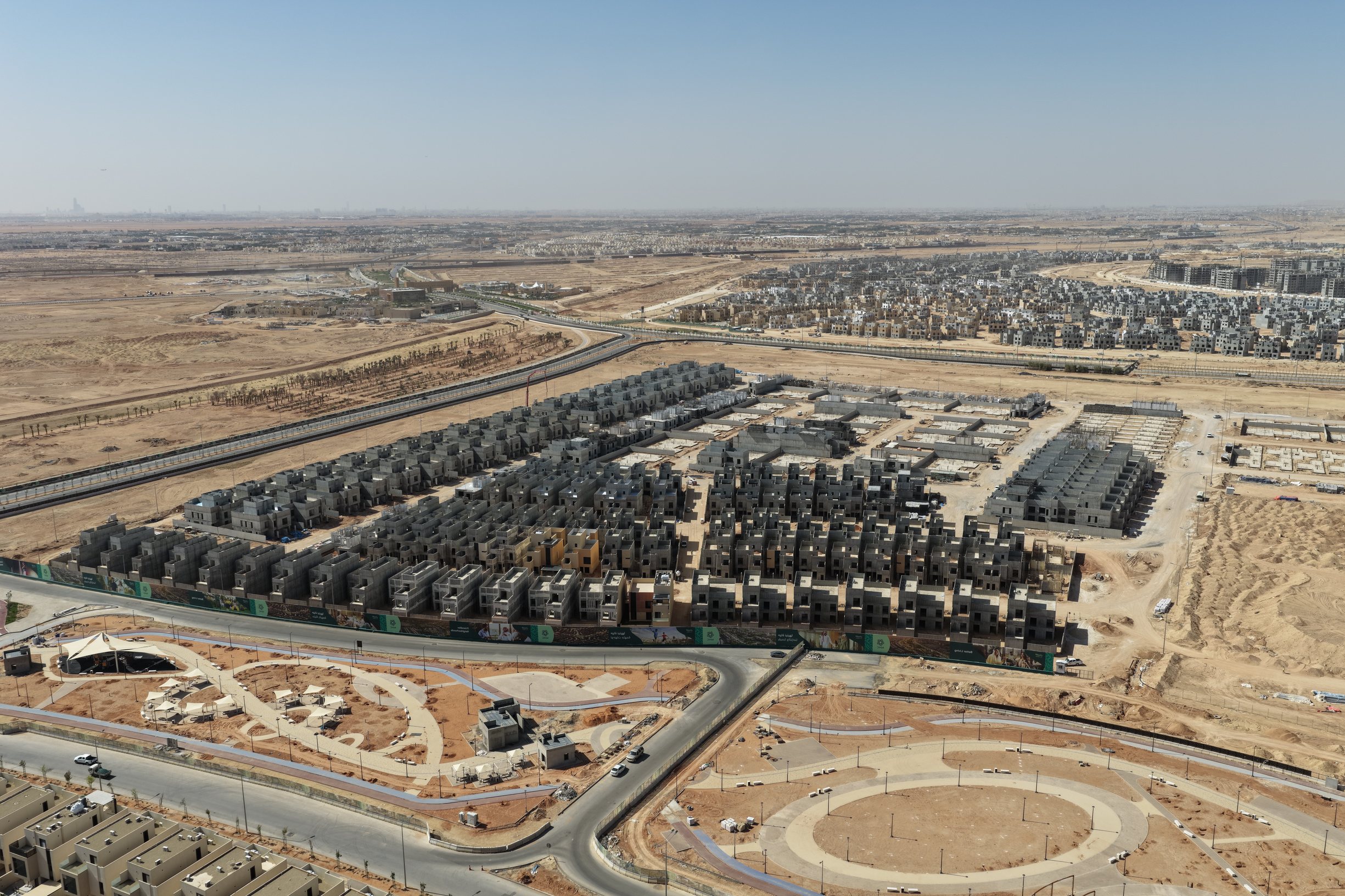
One. The physical process has to repeat. Reinforced concrete walls and slabs poured together as one monolithic structure, on a cycle. Twenty-four sets of aluminum formwork traveling through Al Fursan, each one bolted up, poured, stripped, and carried to the next villa. Four pours per villa, about 4,300 pours across the program. This is running today and it produces three villas a working day.
Two. The process has to be measured while it is happening. Every panel carries a QR code. Every pour is logged by the foreman on his phone, in about four seconds, as it happens. That is TAKT, our own production intelligence layer, and it is the difference between a rate you know and a rate you estimate at month end. It is running today.
Three. The end of the line has to keep up with the front. Speed up structure without speeding up finishing and you have not saved a day, you have moved the queue to a more expensive place. Mechanized primer, putty, sanding and paint are running today for that reason.
WHY IT GETS CHEAPER EVERY TIME
Three compounding effects, in order of how quickly they arrive.
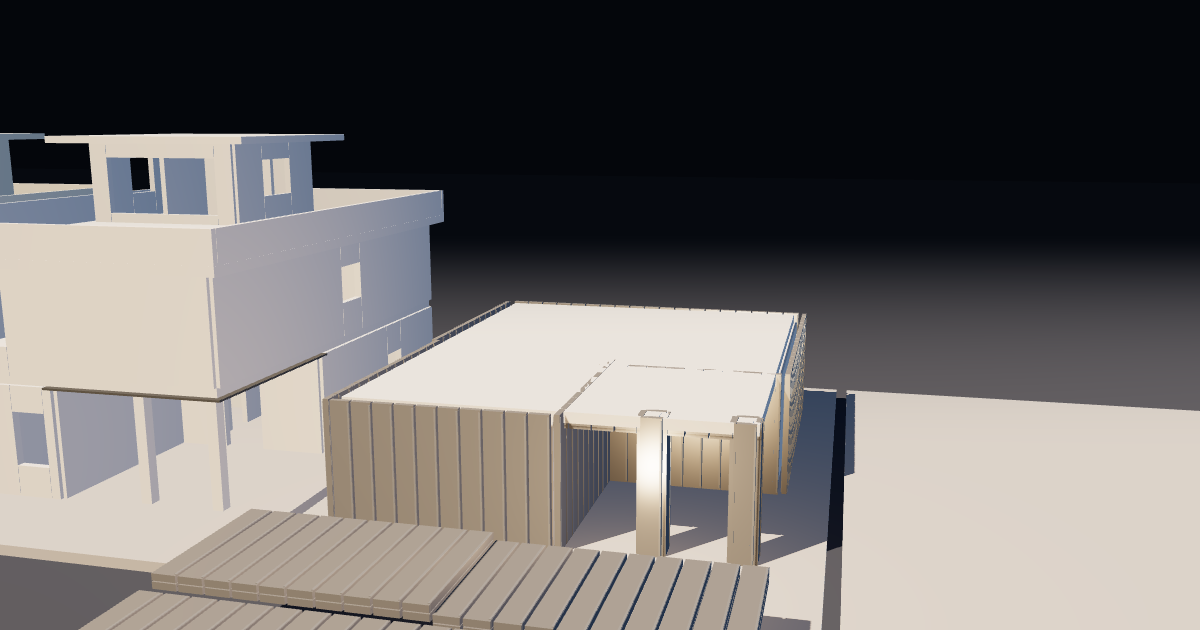
The tooling. Formwork is an asset, not a consumable. The panels are rated for more than a thousand pours, confirmed in writing, which is more than 250 villas from a single set. The cost is incurred once. Every subsequent villa the set builds is cheaper than the one before it, and the asset has a residual value at the end of the program rather than a disposal cost.
The forecast. About 4,300 pours is about 4,300 occasions on which TAKT predicts something and reality corrects it. That correction is retained. The next site does not inherit our crews; it inherits our cycle times, our panel layouts and a forecast that has already been wrong four thousand times and adjusted. A prediction on the second program starts better than the first program's ever got.
The geometry. Every panel layout solved is a layout that never has to be solved again. A library of proven arrangements is the closest thing construction has to a software asset: expensive to produce once, nearly free to use again.
None of this is available to a company that treats each project as a project. All of it is automatic for a company that runs a line.
Which is why the number to hold on to is not three. It is three, from one site, with the second site opening on everything the first one learned. The interesting arithmetic in this business is the multiplication, not the rate.
THE CONSTRAINT WE HAVE NOT REMOVED YET
We buy our production line from another continent and pay for it in advance.
Here is the least comfortable fact about this business, stated plainly, because you would find it out anyway.
Formwork is the physical ceiling on how much TBS can build in a year. It costs about SAR 1,884 per square meter. A villa needs between 1,800 and 2,200 square meters of contact area. The fleet at Al Fursan is 13,271 square meters across 24 sets. It is bought abroad, paid for before it is manufactured, and takes roughly three months to arrive.
Read that again as an operator rather than as a reader. To bid a program, you need panels. To have panels, you must order and pay a quarter ahead. So you are either buying capacity for work you have not won, or declining work because your panels are standing on another site.
That is a tax on growth, paid in cash, up front, to a supplier on another continent. It is also the single clearest thing to fix, and it is what STRUX is.
WHAT WE ARE BUILDING NEXT
Two capabilities. Stated as plans, because that is what they are.
STRUX Manufacturing · 2027. Our own formwork plant. Lead time collapses from months to weeks. The cash stops leaving before the contract starts. Custom geometry stops being a premium item ordered from abroad. Repair and refurbishment happen in-house, which is what protects a panel's rated life and therefore its economics.
Construction robotics · 2028. Machine placement for the most repetitive site work, beginning with full-tile flooring. Deliberately last, because a robot introduced before the line is predictable is a demonstration rather than a capability. Repeat, then predict, then automate, in that order.
Neither is running today. We would rather say so here than have you discover it on a site visit.
THE MARKET THIS IS AIMED AT
1.5 million homes by 2030, and not enough crews to build them.
Saudi Arabia's five major cities are expected to need more than 1.5 million additional homes by 2030, in a climate where the thermometer passes 50°C.
That demand cannot be met by hiring, because the skilled crews do not exist in the numbers required and a shortage does not resolve because a national plan says it should. It can only be met by getting more finished buildings out of the crews that do exist.
At that scale the small numbers are the only numbers that matter. One day of delay, repeated across a thousand units, is a thousand days. One day of improvement is the same thousand days in the other direction. A company that can measure its own rate daily is the only kind of company that can find those days.
WHAT TO CHECK
The claims on this page, and how to verify each one.
- Three villas per working day, from one site. Go to Al Fursan and count. We will arrange it.
- About 4,300 pours across 1,075 villas. Four pours per villa, ground floor to parapet. The set schedule is available on request.
- Panels rated above 1,000 pours. The manufacturer's confirmation is in writing and we will show you the letter.
- 13,271 m² of contact area across 24 sets. From the fleet's set schedule, per villa type.
- Every pour logged as it happens. Ask to see the TAKT record for any date and compare it against the site's own daily report for the same day.
We publish nothing here that cannot be checked on the ground, which is the only standard that matters in a business whose product weighs several thousand tonnes.
Closing
Come and count the villas.
The most useful thing anyone evaluating this company can do is stand at Al Fursan on a working day and watch the line run. Everything on this page is downstream of that.