
QUALITY & SAFETY
You cannot inspect quality into a building. You have to produce it.
Inspection finds defects. It does not prevent them, and by the time it finds them the concrete has set.
Variation is prevented upstream, in the design that was tested against the system that has to build it, in the panels that arrive dimensionally correct, and in a sequence that is the same today as it was yesterday. Repetition is not the enemy of quality here. It is the mechanism.
Recorded outcomes feed the next comparable cycle.
CONSISTENCY BEGINS BEFORE THE POUR
Reduce variation at its source.
Quality begins with a design tested for production, panels manufactured to dimension, and a building sequence repeated under controlled conditions. Our production model is organized around:
- Engineered construction systems matched to the approved design
- Repeatable assembly and structural cycles
- Controlled material and equipment interfaces
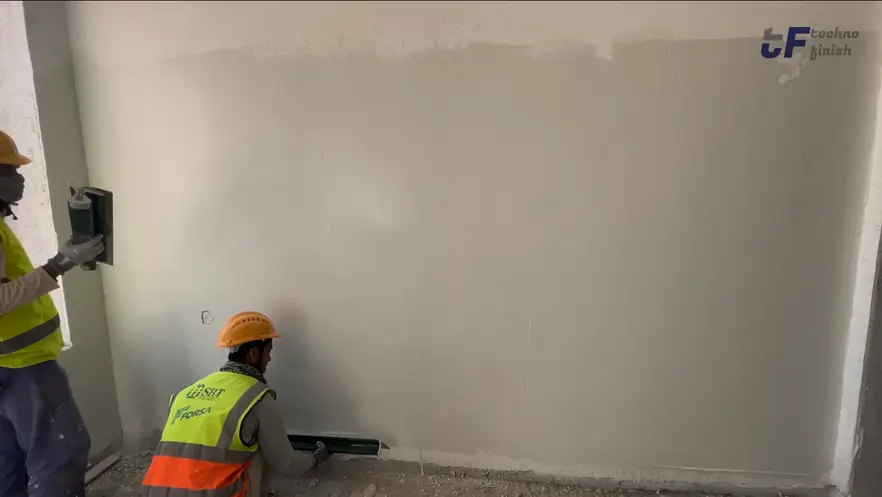
- Mechanized application where a machine is more consistent than a tired hand
- Defined inspection and acceptance points
- Recorded exceptions and corrective actions
- Learning loops in TAKT that test whether a change actually improved the next comparable cycle, rather than assuming it did
That last point is the one most quality systems skip. A corrective action nobody measures is a hope with paperwork attached.
MAKE THE SAFE METHOD THE REPEATABLE METHOD
The most dangerous thing on a construction site is a method invented this morning.
Improvisation is where injuries come from. A crew doing something they have not done before, under time pressure, with equipment that was not selected for it.
Industrialized construction removes most of that by turning the work into a stable, planned sequence, which is a safety benefit before it is a productivity benefit. The system supports:
- Clear work methods and responsibilities, written before mobilization
- Planned interfaces between crews, machines and materials
- Less exposure to repetitive manual work that a machine can do instead
- Human approval required for any decision involving safety or material operating risk
- Traceable instructions, observations and exceptions
- Improvement driven by what actually happened, not by what was supposed to
Closing